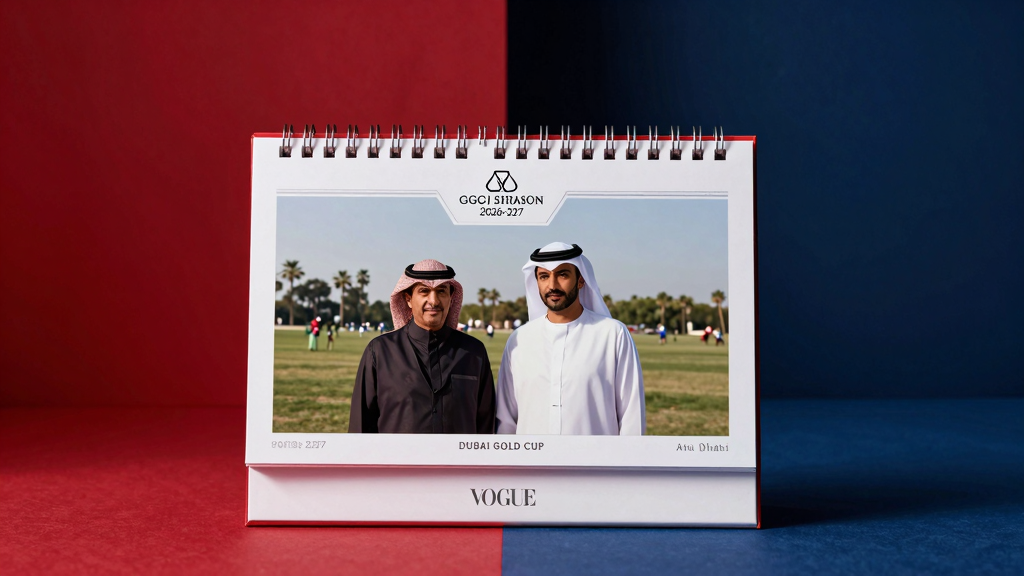
The official calendar for the GCC polo season from October 2026 to April 2027 is now confirmed. New royal patronage for several cornerstone tournaments signals a period of elevated prestige and investment in the sport across the region. For principals and their guests, this advance notice allows for the precise orchestration of travel, hospitality, and participation in the social and sporting highlights of the season.
The Calendar: A Strategic Sequence of Events
The season follows a deliberate geographic and competitive rhythm. It begins in October with preparatory tournaments in Qatar and the UAE. The climate is ideal then. The core winter months from January to March host the most significant championship events. The season concludes in April with tournaments in Sri Lanka, aligning with the monsoon shift.
Key dates for the UAE are as follows. The Dubai Gold Cup Series, a handicap tournament, runs from 15 January to 12 February 2027 at the Desert Palm Polo Club. The Abu Dhabi Silver Cup, a high-goal championship, follows from 1 March to 22 March 2027 at the Ghantoot Racing & Polo Club. These events form the competitive heart of the regional calendar.
In Qatar, the Emir’s Cup in November 2026 at the Al Shaqab club remains a pivotal early-season fixture. Sri Lanka’s season, while shorter, offers a distinct setting. The Ceylon Polo Cup in Galle in early April 2027 presents a different experience, with matches often set against historic coastal backdrops.
The Significance of New Royal Patronage
The announcement of new royal patronage for the Abu Dhabi Silver Cup and the Dubai Gold Cup Series is the most notable development. This is not merely an honorary title. It involves direct oversight from a senior member of a ruling family. Their involvement typically results in increased investment in facilities, higher prize funds, and the attraction of international teams with world-ranked players.
For attendees, this elevation translates to a more refined event standard. Hospitality pavilions see upgrades. Security and logistics operate with greater precision. The social gatherings associated with the tournaments gain exclusivity and significance. It becomes an occasion where sporting excellence meets formal diplomacy and high-level networking.
The patronage also stabilises the calendar. With such endorsement, dates and venues are fixed years in advance. This allows families and offices to plan with certainty. It contrasts with some purely commercial sporting events where schedules can shift.
Orchestrating Attendance: Beyond Spectator Tickets
Attending a high-goal polo tournament in the GCC is a multi-faceted engagement. Securing a general admission ticket is straightforward. The true experience, however, is accessed through private hospitality. A corporate house may wish to host a client day in a premier pavilion with catering for 30 guests. A family office might request a tailored weekend for a visiting principal, encompassing match viewing, stable tours, and post-game dinners.
Each element requires separate coordination. Pavilion bookings are often confirmed a year in advance. Transport must account for controlled access zones around the clubs. A typical request we manage involves arranging for a fleet of specific vehicles—perhaps a mix of Bentley Bentaygas for senior guests and a Mercedes-Benz V-Class for larger groups—to collect guests from different hotels and deliver them to a designated pavilion entrance.
Post-match, the rhythm continues. Dinners are held at member-only clubs or in private villas. For those new to the region, understanding the formal and social codes of these gatherings is important. Our role is to provide that context seamlessly, as detailed in our guide to regional protocols for international visitors.
The Distinct Character of Each Polo Destination
The three Luxcierge geographies offer distinct polo experiences. Dubai’s events are characterised by scale and glamour. The Desert Palm and Al Habtoor Polo Club settings are modern and luxurious. The social scene is international and vibrant.
Abu Dhabi’s tournaments, particularly at Ghantoot, retain a deep connection to the region’s equestrian heritage. The atmosphere is often more formal, with a strong presence of regional families and dignitaries. The new patronage will likely accentuate this tone.
Qatar’s polo season, centred on Al Shaqab’s world-class facilities, is compact and exceptionally well-resourced. The focus is on the quality of sport and the comfort of a select audience. It is less a prolonged social season and more a series of high-calibre sporting fixtures.
Sri Lanka provides a complete contrast. Polo here is played in Galle, Kandy, or Colombo. The atmosphere is more relaxed, set within colonial-era clubs or against tropical landscapes. The Ceylon Polo Cup in April is as much a destination event as a sporting one. It suits principals seeking a combination of sport, culture, and coastal leisure at the end of the GCC winter.
A Scenario: Hosting International Partners
Consider a European family office planning to host three partner families during the Dubai Gold Cup semi-finals. The request involves four days of curated activities centred on one match day. The sporting day requires a private pavilion terrace, a guided tour of the stables with a patron, and a lunch with a former player to explain the game’s nuances.
The surrounding days are designed to showcase the region. One day may be reserved for a private yacht charter on a 90-foot Sunseeker from Dubai Marina to the Palm Jumeirah. Another could feature a curated tour of the Louvre Abu Dhabi, followed by dinner at a secluded estate. The final day might involve a quiet desert retreat with a bespoke culinary experience, away from the city.
Each component demands knowledge of access, quality, and timing. The polo day itself is the anchor, but the full programme creates the value. Advance planning is non-negotiable. Prime hospitality spaces at the polo are allocated well before the season starts. The most suitable yachts and vehicles are reserved months ahead.
Beginning a Conversation
The release of the official polo calendar is the first step in a long planning cycle. Engaging with these events requires local knowledge, logistical precision, and diplomatic tact. The Luxcierge house assists principals and their offices in navigating this process, from securing premier hospitality to designing the broader itinerary that frames the sporting occasion. For a preliminary discussion on the 2026-2027 season, you can speak with the house.
— The Luxcierge Editor